
How an Information Security Officer Protects the State Like She Protects Her Own
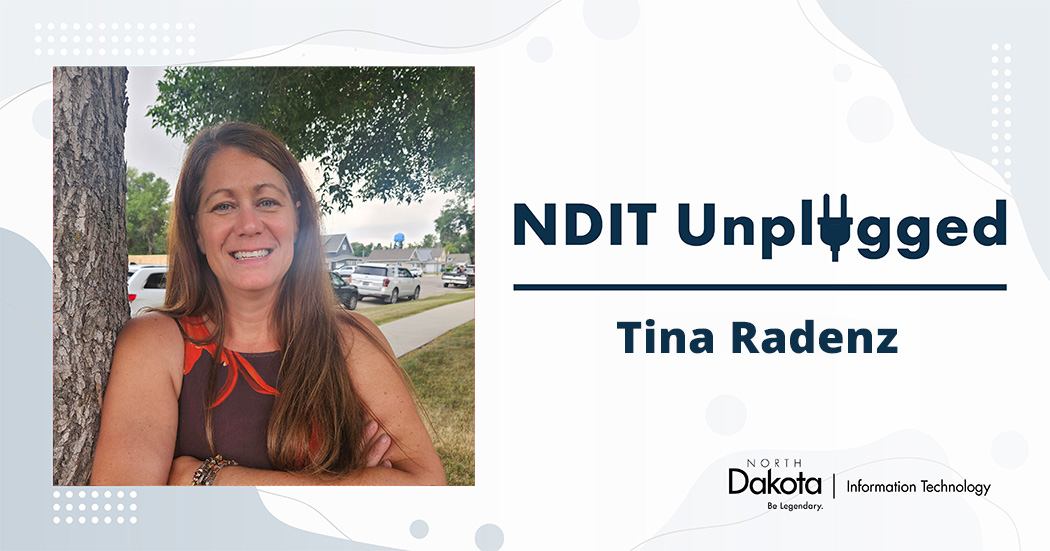
Gym lights hum overhead, and the smell of wrestling mats fills the air before a single whistle blows. The space bustles with kids, parents, and coaches, but Tina Radenz moves through the chaos with the calm efficiency of someone who’s done this a hundred times—because she has. First with her two older boys, and now with her daughter.
Hair secure, check. Headgear, check. Singlet fitted right. Laces double-knotted. Inhaler nearby. Water bottle within reach. And, for good measure, one last reminder: “Listen to your coaches!” (Who just so happen to be her daughter’s older brothers.)
It’s a series of quiet, practical questions that make all the difference. Do you have this? Do you have that? Did you eat enough? Did you eat right? To an outsider, it might look like fussing, but it isn’t. It’s protection and planning, delivered the only way Radenz knows how: early, thoroughly, and with the best intentions.
As her daughter sits on the mat to lace up her shoes, Radenz kneels down to meet her gaze.
“Win or lose, you keep your head up,” she says, grasping her daughter’s arm and sporting a warm smile. “And most importantly, remember how proud I am of you and how much I love you, no matter what. You’ve got this, and no crying till you’re off the mat!”
That same instinct—to prepare people, protect them, and make sure they have what they need—follows Radenz to work each day, too. Just with a different kind of gear check.
As a Senior Information Security Officer at NDIT, Radenz spends her days asking state employees versions of the same questions she asks her daughter before a wrestling match: Do you have what you need? Did you check everything twice? Have you considered whether that digital tool is safe to use?
Because the consequences of skipping those questions can be very real—whether it’s a takedown on the mat or a click on a phishing email. Radenz wants to prevent both. By her own admission, she can come across as firm. Direct, even. But behind that bluntness is something much warmer: a genuine desire to protect people and help them succeed.
Call it tough love.

Tina Radenz and her family enjoy cheering on her daughter at wrestling matches. Her two sons serve as coaches, bringing plenty of encouragement—and just enough tough love—to make sure their little sister is always ready for the next challenge.
A Farm Girl From Day One
Long before she was securing state systems, Radenz was learning the value of hard work on a farm north of Wilton, ND.
She grew up next door to her grandparents, with cousins scattered a few miles down the road in every direction. Her childhood was built around the rhythms of farm life: running more than 200 head of cattle and, for a stretch, managing thousands of chickens on top of that.
Farm work didn’t care what day it was. Summer birthdays meant gathering eggs or processing birds before the cake came out. Holidays brought chores, too. The animals still needed to be fed, the work still needed to get done, and there was always something urgent that came up.
That kind of life teaches you a few things early: Show up. Pay attention. Be prepared. And when something goes wrong, find a way to make it right.
In her late thirties, a spooked cow kicked Radenz in the head, resulting in a concussion that cost her eight full hours of memory. She doesn’t remember the incident itself—only what came later, when she began repeating herself and her family realized something was seriously wrong.
Radenz recovered and, perhaps unsurprisingly, went right back to working cattle. Her dad still teases her about wearing a helmet behind the chutes. She still lovingly tells him to shush.
It’s a small story, but it captures something fundamental about Radenz. Farm life taught her to work hard, pay attention to the details, and keep moving when things get difficult.
As it turns out, farm life would also serve Radenz well in a career she never could have predicted.
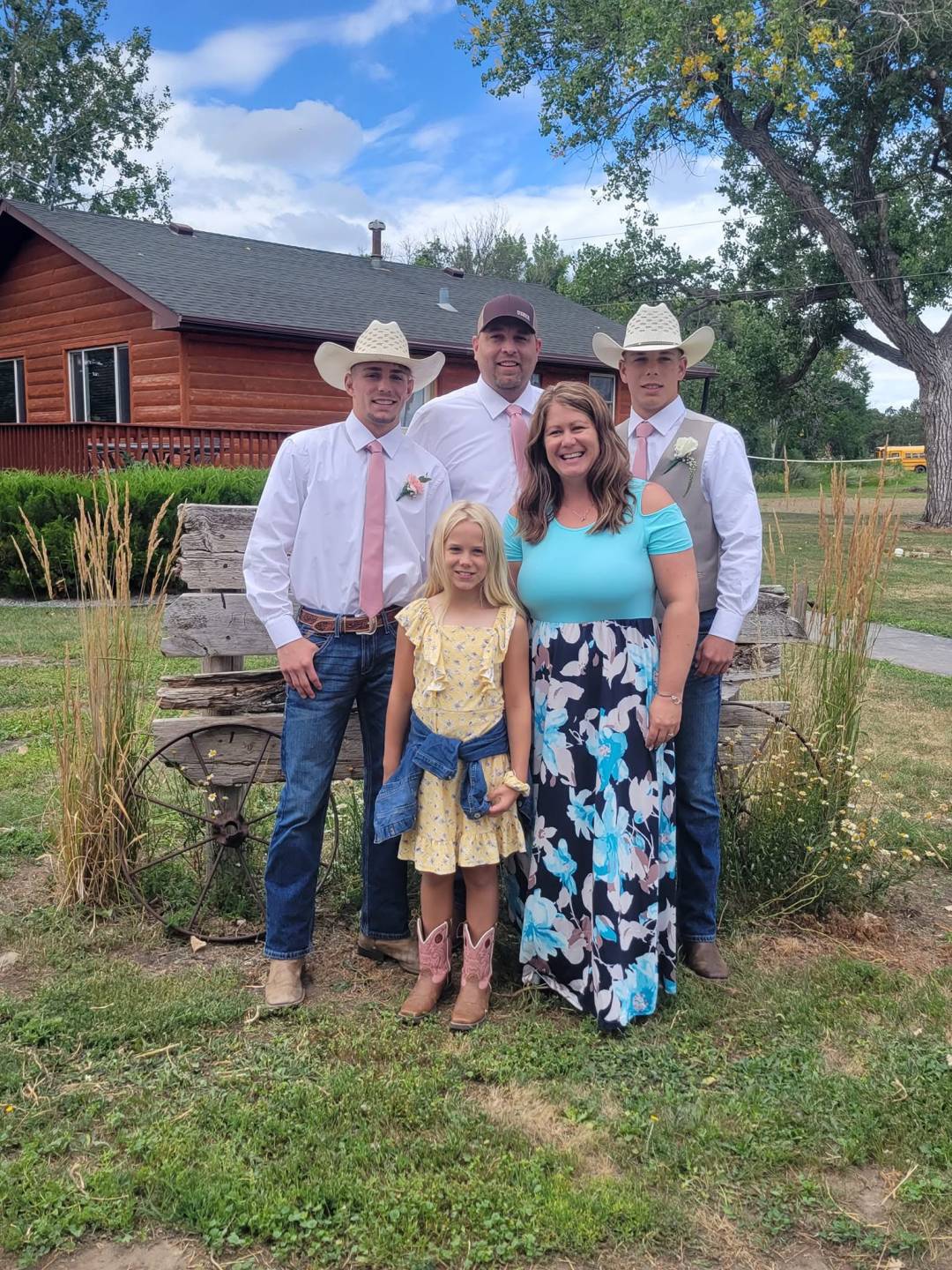
Radenz learned the value of hard work, preparation, and looking out for others growing up on the farm—and she passed those same values on to her children.
From Fingerprints to Firewalls
Radenz’s career journey began with a criminal justice degree from Bismarck State College and a part-time internship at the Attorney General’s Office, where she started at 19, conducting background checks between classes. She had always wanted to be a parole and probation officer, drawn to work that could both hold people accountable and help improve their lives.
Along the way, she picked up an unusual credential—FBI fingerprint training.
Fun fact: Radenz implemented North Dakota’s first live-scan electronic fingerprinting machines, helping roll them out across law enforcement agencies statewide. She also wrote the state’s first digital concealed weapon permit system and helped build the original sex offender registry website.
“It’s still fun seeing those things and thinking, ‘I helped build that,’” she says. Those early projects foreshadowed what would become a defining strength in Radenz’s career: security.
Radenz went on to train law enforcement and state’s attorney’s offices across North Dakota on the criminal justice systems she helped build. She loved the work, but the constant travel became harder with two young boys at home, including one with medical and speech needs.
So in 2007, when her former boss called about a quality assurance role at the Bank of North Dakota, she took it. The job brought her closer to home and, eventually, deeper into technology. She moved through identity management, access control, and tech support before the bank unified with NDIT in 2021.
Soon after, thanks to supportive friends who urged her to apply for her dream role, she became an Information Security Officer, then a Senior Information Security Officer two years later—nearly three decades into a state career that began with a paper application and a fingerprint scanner.
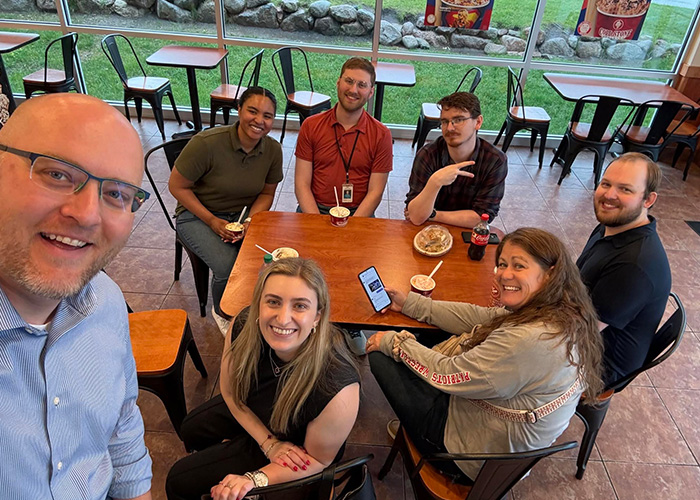
For Radenz, some of the best parts of the job are the people she gets to share it with. She enjoys close work friendships built on trust, laughter, and a genuine appreciation for one another.
Always Digging Deeper
Radenz’s approach to cybersecurity is simple: pay attention, ask questions, and don’t stop at the first answer.
That mindset has produced some very real results. For example, NDIT’s phishing simulations have brought the statewide click rate below 5%, meaning thousands of state employees have learned to pause before clicking. And when a suspicious message does make it through, employees are increasingly willing to report it—giving Radenz and her team a chance to investigate before a small concern becomes a much bigger problem.
One employee recently flagged a suspicious email that, after further investigation, revealed a pattern of contact that raised serious safety concerns. In another case, a quick report on a convincing phishing attempt helped stop what could have become a costly business email compromise.
“I circled back with those agencies and told them, ‘Kudos to you guys, because someone did the right thing!’” Radenz says. “It’s stuff like that that makes you feel good. You don’t want those situations to happen, but if you can identify the issue and fix it, it makes a huge difference.”
That persistence has been part of Radenz’s working style for years. In her quality assurance days, she was the person who tried to break things on purpose—a smell test, if you will—just to prove they needed a second look. Today, when an incident lands on her desk, she keeps digging until she understands what happened and what needs to happen next.
“I’ll go down a rabbit hole,” she says, “and it will quickly become a badger hole. I keep going, and I don’t stop.”
It’s the same persistence behind NDIT’s Cybersecurity Awareness Month campaign each October, when Radenz and her team turn complex security lessons into practical advice for everyday North Dakotans.
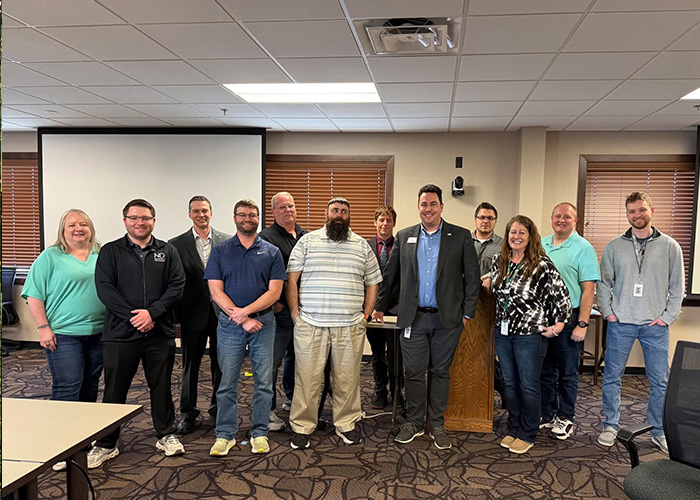
Radenz and her Security colleagues work together to make North Dakota safer—digging deeper, asking questions, and helping state employees build stronger cybersecurity habits. Together, they’ve helped drive the statewide phishing click rate below 5%.
It’s About People & Partnership
Ask Radenz what she likes most about her job, and the answer isn’t a system or a title—it’s the people beside her.
She’s quick to mention her Service Delivery counterparts, Technology Business Partners and Enterprise Architects, who work alongside Information Security Officers like her to support state agencies. Radenz and these close colleagues informally call their partnership the “three-legged stool.” Each leg has a role to play, and the stool only works when all three are working together.
That collaborative mindset matters even more as the technology they’re securing continues to evolve. Artificial intelligence, in particular, is creating new questions for security teams: What can these AI models do? What information is safe to put into them? And how do you make the most of new technology without creating new risks?
For Radenz, that natural curiosity is part of what makes the work interesting. It’s also something she shares with her coworkers, especially within the Security group, where some of her closest friendships have grown.
Radenz loves running into colleagues at wrestling meets. She also enjoys a good challenge—one that requires asking another question, looking a little closer, and figuring out what’s really going on. Team members have been known to leave her coded messages just to watch her puzzle them out. And at home, she competes fiercely with her husband and kids over video games.
Whether she’s solving a puzzle, encouraging coworkers to join her for a 5 a.m. sunrise walk, or cheering from the sidelines at a wrestling meet, one thing’s for certain—Radenz has a way of bringing people into whatever she’s doing.
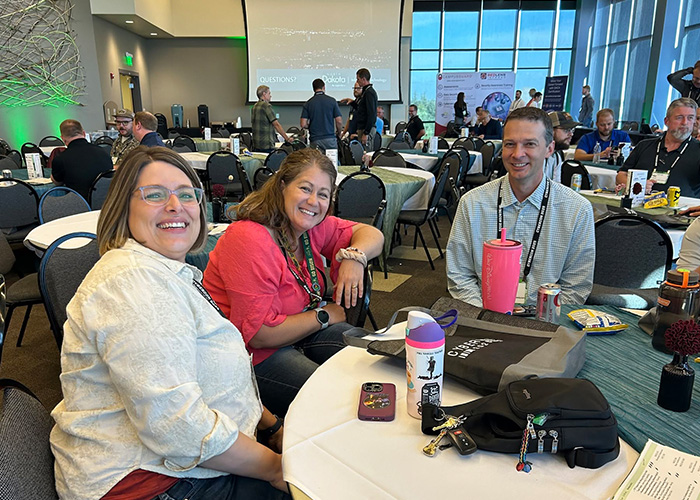
Radenz has a way of bringing people together. For her, the best part of the job is the people beside her and the partnerships that make the work stronger.
Discovering a Softer Side
With almost 30 years in state government, Radenz doesn’t pretend it’s always been easy. Legislative sessions bring a little stress, and state politics in general can be challenging. But when she talks about NDIT, something shifts. She’s proud of the agency’s recognition as a Top 10 Workplace and values a culture where she’s trusted to run with ideas and own her decisions.
It’s that perspective that brings out her softer side.
“At the end of the day, I’m here to help,” she says. “I may be blunt, but I have a heart—I promise!”